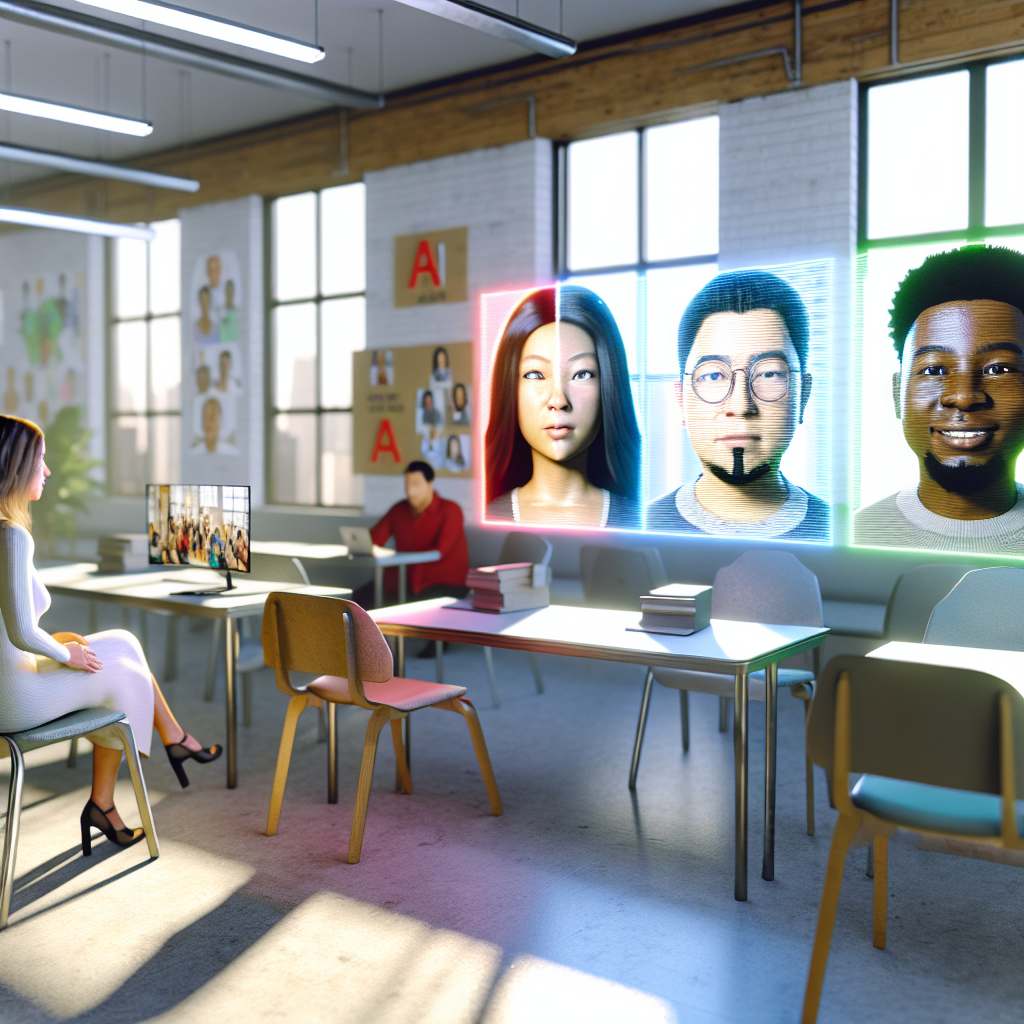

The Hidden Truth About AI’s Impact on Educational Equity
- Technology
- September 20, 2025
- No Comment
- 49
The Rise of AI Digital Education: Transforming Learning in the 21st Century
Introduction
In the age of technology, AI digital education stands at the forefront of transforming traditional learning methods. Where chalkboards and textbooks once ruled, algorithms and data-driven insights are now taking their place, reshaping the education landscape for teachers and students alike. As we delve into this transformative journey, we explore how AI is not merely a tool but a catalyst in redefining how education is approached and delivered.
Background
Educational technology, or edtech, has been evolving at a remarkable pace. Historically, the initial wave of digital classrooms focused on replacing traditional tools with their digital counterparts—smartboards instead of blackboards, tablets instead of textbooks. However, the integration of AI learning tools marks a revolutionary shift beyond simple digitization.
AI empowers educators to provide personalized learning experiences and resources tailored to individual student needs. Much like the Industrial Revolution changed production, AI digital education is changing learning by creating more engaging and adaptive educational environments. This evolution from a uniform, one-size-fits-all model to a personalized approach is akin to shifting from an assembly line to bespoke craftsmanship in education.
Trend
The trend towards AI digital education is characterized by the customization of the learning experience. AI technologies have the capability to analyze vast amounts of data—students’ performance, preferences, and behaviors—to create adaptive learning models. These models support personalized learning experiences that cater to a student’s unique learning style and pace, thus enhancing educational outcomes.
For instance, consider an AI learning platform that modifies math problem difficulty based on real-time analysis of a student’s responses, ensuring they stay challenged without feeling overwhelmed. This level of personalization makes education more accessible, engaging, and effective than ever before.
Insight
As AI digital education continues to grow, ethical implications and the necessity of building trust in technology come to the forefront of discussions. The core of making AI successful in education hinges on the trust of its users—students, teachers, and parents. A recent article on HackerNoon Trust by Design emphasizes the need for AI and cybersecurity companies to integrate ethical considerations into their designs, fostering user trust. This concept is particularly relevant in education, where the impact of AI decisions can directly affect student learning outcomes.
By ensuring transparency and prioritizing ethical use, the trust in AI digital tools can be cultivated, making them an accepted and integrated part of the educational landscape.
Forecast
Looking ahead, AI digital education promises exciting possibilities and potential transformations in educational methodologies. The future may witness the advent of more sophisticated AI-driven tools that not only personalize learning but also predict educational paths and outcomes. For example, AI could forecast a student’s likelihood of excelling in certain subjects or alert educators to areas where a student may need additional support, enabling proactive interventions.
The emergence of immersive technologies like virtual and augmented reality, driven by AI, could further evolve digital classrooms, making learning experience-based and highly interactive. As these technologies mature, they will likely push the boundaries of traditional learning environments, offering students experiences akin to stepping into a virtual arena where learning is lived rather than observed.
Call to Action (CTA)
As we embrace the future of AI in education, it is essential to stay informed and engaged. The impact of AI in educational settings can pivot numerous facets of learning. Join the conversation on how AI digital education will continue to redefine learning paradigms. Subscribe to our publication for more insights into the evolving world of edtech, and let’s shape the future of education together.
In conclusion, the integration of AI in digital education represents more than a technological upgrade; it is an educational revolution, driven by the power of personalized learning and predictive insights. The continual advancements in AI will likely redefine learning and teaching methodologies, ensuring education evolves to meet the needs of every learner in this increasingly digital age.